

The vaginal environment has its own protective biological system. An important part of that system is vaginal pH, a measurement that indicates how acidic or alkaline the vagina is. Although pH may sound like a laboratory concept, it has practical implications for everyday comfort, odor, discharge, microbial balance, and protection against certain infections.
For most reproductive-age women, a healthy vaginal environment is moderately acidic. This acidity supports beneficial bacteria while making it more difficult for many potentially harmful organisms to multiply. The balance is dynamic, however. Menstruation, sexual activity, pregnancy, menopause, antibiotics, hygiene products, and infections may temporarily or persistently change it.
An altered measurement does not automatically mean that something is seriously wrong. Normal ranges vary according to age, hormonal status, and life stage. At the same time, a persistent change accompanied by strong odor, abnormal discharge, itching, burning, or pain may indicate that professional assessment is needed.
This 2026 guide explains how vaginal acidity works, why it matters, what commonly disrupts it, whether home tests are reliable, and how women can support a balanced intimate environment without unnecessary or aggressive products.
What Does Vaginal pH Mean?
The pH scale measures how acidic or alkaline a substance is. It extends from 0 to 14. A measurement below 7 is acidic, 7 is neutral, and a measurement above 7 is alkaline. Each whole-number change represents a tenfold difference in acidity or alkalinity, which means even a relatively small numerical change can reflect a meaningful chemical shift.
In healthy reproductive-age women, vaginal pH is commonly between approximately 3.8 and 4.5. This range is more acidic than the skin and considerably more acidic than water. It should not be interpreted as a rigid universal target, because age, estrogen levels, menstruation, pregnancy, and other biological factors affect what is normal for each person.
The external vulva and the internal vaginal canal are different anatomical areas. Products marketed as “pH-balanced” for external intimate skin do not necessarily reproduce or regulate conditions inside the vagina. This distinction matters because the vagina is self-cleaning, whereas the vulva may be gently washed externally.
How the pH Scale Applies to Intimate Health
A pH measurement reflects the chemical environment at the time of testing. It does not identify the exact organisms present and cannot independently diagnose an infection. Instead, it gives clinicians one piece of information that can be interpreted alongside symptoms, medical history, physical examination, discharge characteristics, microscopy, or laboratory testing.
For example, an elevated result may be associated with bacterial vaginosis or trichomoniasis, but it can also occur during menstruation, after intercourse involving semen, or following menopause. A normal acidic reading may be present during a yeast infection. Therefore, the result must always be interpreted in context.
How the Vaginal Microbiome Controls Acidity
The vagina contains a community of microorganisms collectively known as the vaginal microbiome. In many healthy women, this ecosystem is dominated by beneficial species of Lactobacillus. These bacteria help maintain vaginal pH by producing lactic acid from glycogen-related compounds in vaginal tissue.
Lactic acid contributes to an environment that discourages the overgrowth of many unwanted bacteria. Some Lactobacillus strains may also produce other protective substances and compete with potentially harmful microbes for space and nutrients. This does not make the vagina sterile. A healthy microbiome may contain several types of microorganisms, and its composition can differ among individuals.
The Role of Estrogen and Glycogen
Estrogen supports the thickness and maturation of vaginal epithelial tissue. As these cells mature, they contribute to the availability of glycogen-related nutrients. Beneficial bacteria use these resources in processes that support lactic-acid production.
When estrogen falls, particularly during menopause, vaginal tissue may become thinner and less elastic. Beneficial bacterial populations may also decline, making the environment less acidic. This is one reason postmenopausal women may naturally have a higher reading than women of reproductive age.
Hormonal changes during breastfeeding, postpartum recovery, and some medical treatments can create similar effects. In these situations, a higher result may be related to hormonal physiology rather than poor hygiene.
Why Vaginal pH Matters
A stable acidic environment forms part of the vagina’s natural defense system. It does not prevent every infection, but it can make conditions less favorable for certain organisms associated with bacterial imbalance.
When the microbial ecosystem changes and acidity decreases, anaerobic bacteria may multiply. This pattern is commonly seen in bacterial vaginosis, a frequent vaginal condition associated with thin discharge and a noticeable fishy odor. The condition is not simply caused by being “unclean,” and aggressive washing can make the imbalance worse.
Balanced acidity also supports the normal behavior of vaginal fluids and tissues. Persistent disruption may coincide with irritation, odor changes, discomfort, or altered discharge, although symptoms and severity vary considerably.
Acidity Is Only One Part of Vaginal Health
A healthy reading does not guarantee that no condition is present. Yeast infections, for example, often occur while the environment remains within its usual acidic range. Vulvar dermatitis, allergic reactions, skin conditions, urinary infections, and pelvic disorders may also cause discomfort without significantly changing internal acidity.
For this reason, women should avoid treating a number on a test strip as a complete diagnosis. Symptoms, clinical examination, and appropriate laboratory investigations remain essential when a condition is suspected.
Normal Ranges Across Different Life Stages
What is considered normal depends partly on estrogen exposure and life stage. The figures in the following table are general clinical patterns rather than diagnostic limits.
| Life stage or situation | Common pH pattern | Why it may change | Practical interpretation |
|---|---|---|---|
| Before puberty | Often above 4.5 | Lower estrogen and fewer lactobacilli | A higher result can be physiologically normal |
| Reproductive years | Commonly 3.8–4.5 | Estrogen supports lactobacilli and lactic-acid production | Persistent elevation with symptoms may require assessment |
| Pregnancy | Usually remains acidic | Hormonal changes support glycogen availability | Symptoms still require pregnancy-appropriate evaluation |
| Menstruation | May rise temporarily | Menstrual blood is less acidic than the usual vaginal environment | Test results during bleeding may be difficult to interpret |
| Shortly after semen exposure | May rise temporarily | Semen is relatively alkaline | A temporary change does not automatically indicate infection |
| Breastfeeding or postpartum | May be higher | Estrogen can remain temporarily reduced | Dryness and irritation may accompany hormonal changes |
| Perimenopause and menopause | Frequently above 4.5 | Declining estrogen alters tissue and microbiome composition | Symptoms may reflect genitourinary syndrome of menopause |
Individual variation remains important. A measurement outside a commonly quoted range should not be treated in isolation, particularly when there are no symptoms.
What Can Disrupt Vaginal pH?
The vaginal ecosystem responds to biological and environmental influences. Some changes are temporary and resolve without treatment, while others persist because of infection, medication use, hormonal shifts, or repeated exposure to irritants.
Factors that may affect vaginal pH include:
- Menstrual blood, which can temporarily make the vaginal environment less acidic.
- Semen exposure because semen is more alkaline than the usual vaginal environment.
- Douching, internal cleansing, antiseptics, or fragranced intimate products.
- Antibiotic use, which may reduce protective bacteria alongside harmful bacteria.
- Bacterial vaginosis and certain sexually transmitted infections, particularly trichomoniasis.
- Reduced estrogen during breastfeeding, perimenopause, menopause, or some medical treatments.
- New sexual activity or changes in sexual exposure that influence microbial composition.
- Retained tampons or other foreign objects, which may cause odor and abnormal discharge.
Stress, sleep disruption, metabolic health, and immune function may indirectly influence susceptibility to microbial imbalance. Their effects are complex, however, and they should not be used to blame an individual for developing symptoms.

Conditions Associated With an Elevated pH
An elevated result may provide a clue, but different conditions can produce overlapping symptoms. Accurate diagnosis is especially important because treatments for bacterial, fungal, parasitic, inflammatory, and hormonal conditions are not interchangeable.
Bacterial Vaginosis
Bacterial vaginosis occurs when the usual balance of vaginal bacteria changes and certain anaerobic organisms become more abundant. It is often associated with a reading above 4.5, thin gray or white discharge, and a fishy odor that may become more noticeable after sex or during menstruation.
Some women have no obvious symptoms. When treatment is necessary, a clinician may prescribe an appropriate antibiotic. Douching and deodorizing products should not be used as substitutes because they do not correct the underlying imbalance and may increase recurrence risk.
Trichomoniasis
Trichomoniasis is a sexually transmitted infection caused by a parasite. It may produce yellow-green or frothy discharge, irritation, burning, odor, or discomfort during urination, although many people remain asymptomatic. The vaginal environment is frequently less acidic when this infection is present.
Diagnosis requires suitable testing, and sexual partners may also require treatment. Home pH testing alone cannot distinguish trichomoniasis from bacterial vaginosis or other causes of symptoms.
Genitourinary Syndrome of Menopause
After menopause, reduced estrogen may lead to thinner tissue, dryness, burning, discomfort during sex, urinary urgency, and recurrent urinary symptoms. The microbiome may contain fewer lactobacilli, and acidity commonly decreases.
This is a hormonal and tissue-related condition rather than a cleanliness problem. Depending on medical history and symptom severity, management may include vaginal moisturizers, lubricants, local hormonal treatment, or other clinician-recommended options.
Can a Yeast Infection Change Vaginal pH?
A common misconception is that every vaginal infection raises pH. Vulvovaginal candidiasis, usually called a yeast infection, often occurs while vaginal pH remains within its expected acidic range.
Typical symptoms may include intense itching, redness, swelling, burning, and thick white discharge. However, these features are not exclusive to yeast. Contact dermatitis, inflammatory conditions, bacterial infections, and some sexually transmitted infections may cause similar discomfort.
Using antifungal treatment repeatedly without confirming the cause can delay correct care. Women with first-time, severe, persistent, or recurrent symptoms should seek professional evaluation rather than relying exclusively on previous experience or a home strip.
Can You Test Vaginal pH at Home?
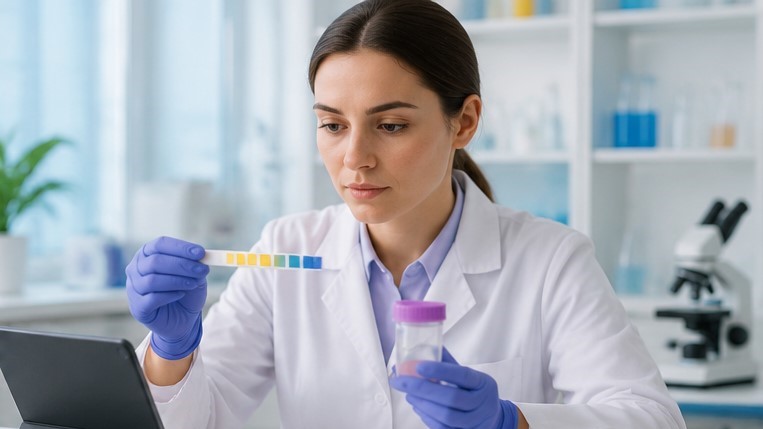
Home testing kits generally use a small strip or swab that changes color when exposed to vaginal fluid. When used correctly, they can indicate whether the sample is within or above a specified range. They may be useful as a screening aid, particularly for women who have received guidance from a healthcare professional.
However, home tests have clear limitations. They cannot identify the exact cause of an elevated measurement, detect every infection, or determine whether irritation is caused by a dermatological or hormonal condition. Blood, semen, lubricants, medications, and sampling errors may affect the result.
How to Reduce Testing Errors
If a home test is used, carefully follow the manufacturer’s instructions. Avoid testing during menstruation unless the kit specifically allows it. Recent intercourse, douching, vaginal medication, and internal products can interfere with interpretation, so the waiting period stated in the instructions should be respected.
The strip should contact the vaginal wall or discharge as directed without touching urine or external soap residue. Results must be read within the specified time because the color may continue to change later.
A positive or elevated result should be considered a reason to assess symptoms and seek guidance when appropriate—not a reason to begin random treatment. A normal result should likewise not override persistent pain, itching, bleeding, sores, or abnormal discharge.

How to Support a Balanced Vaginal Environment
The body generally regulates vaginal pH without special cleansing routines. The most supportive strategy is to minimize unnecessary disruption and address symptoms according to their actual cause.
Practical habits include:
- Wash only the external vulva with warm water or a mild, fragrance-free cleanser.
- Never douche or place soap, deodorant, antiseptic, or perfume inside the vagina.
- Change out of wet swimwear and sweaty exercise clothing without unnecessary delay.
- Select unscented menstrual products and replace them according to product guidance.
- Use fragrance-free lubricants that are designed for intimate use when additional lubrication is needed.
- Take antibiotics exactly as prescribed and discuss recurrent symptoms with a clinician.
- Consider condoms if semen exposure repeatedly appears to coincide with symptoms.
- Seek individualized advice for menopausal dryness instead of using untested internal remedies.
Probiotic foods can be part of a balanced diet, but they should not be presented as guaranteed treatment. Evidence for oral and vaginal probiotic products varies by strain, dose, condition, and study design. A product labelled “probiotic” is not automatically proven to restore the vaginal microbiome.
Related Articles: Estrogen Metabolism and Uterine Fibroids
Are pH-Balancing Products Necessary?
Many washes, gels, suppositories, and supplements are marketed as ways to “balance” the vagina. Marketing language can make ordinary biological variation appear like a problem that requires constant correction. In reality, most symptom-free women do not need a product to regulate internal acidity.
A formulation described as pH-balanced may only indicate that its own acidity is within a selected range. It does not prove that the product can treat bacterial vaginosis, prevent infection, or permanently alter the microbiome. Fragrance-free external products may be appropriate for some women, but internal treatments should have a clear purpose and reliable safety information.
Boric acid is sometimes recommended medically for selected recurrent or resistant infections. It is not a general wellness product, must never be swallowed, can be toxic if ingested, and may be inappropriate during pregnancy. It should be used only under suitable professional guidance.
DIY remedies involving vinegar, yogurt, essential oils, baking soda, garlic, or antiseptics can irritate tissue and complicate diagnosis. “Natural” does not automatically mean safe for vaginal use.
When Should You Seek Medical Advice?
A temporary shift without symptoms may resolve naturally. Professional assessment becomes more important when a change is persistent, recurrent, severe, or associated with other warning signs.
Seek medical advice for strong or persistent odor, green or yellow discharge, significant itching, sores, swelling, painful urination, pelvic pain, fever, bleeding after sex, or discomfort during intercourse. Evaluation is also advisable after possible STI exposure, during pregnancy, or when symptoms repeatedly return after over-the-counter treatment.
Severe pelvic pain, fever, heavy unexplained bleeding, faintness, or symptoms during pregnancy may require prompt medical attention. These signs should not be managed solely with home testing or intimate care products.
Conclusion
Understanding vaginal pH helps explain how beneficial bacteria, hormones, natural acidity, and everyday exposures influence intimate wellness. During the reproductive years, an acidic environment commonly supports protective lactobacilli, but the expected range can change with menstruation, pregnancy, breastfeeding, menopause, sexual activity, and medical conditions.
The goal is not to force every measurement toward a single number. It is to respect the vagina’s self-regulating biology, avoid disruptive practices, recognize meaningful symptoms, and obtain an accurate diagnosis when needed. Gentle external cleansing, avoidance of douching, careful product selection, and timely clinical care are more reliable than fragranced products or unproven home remedies.
For evidence-led women’s wellness information and carefully developed intimate-care solutions, explore Pharmington and speak with a qualified healthcare professional before treating persistent or recurrent symptoms.
Frequently Asked Questions
1. What is a normal vaginal pH?
For many reproductive-age women, the usual range is approximately 3.8 to 4.5. A higher measurement may be normal before puberty, during menstruation, after childbirth, while breastfeeding, or after menopause. Symptoms and life stage must be considered alongside the number.
2. Does an elevated pH always mean infection?
No. Menstrual blood, semen, reduced estrogen, and recent use of internal products can temporarily increase the reading. Persistent elevation accompanied by odor or unusual discharge may suggest bacterial vaginosis, trichomoniasis, or another condition requiring evaluation.
3. Can I restore vaginal acidity naturally?
In most cases, the best approach is to stop disruptive practices and allow the body to regulate itself. Avoid douching and fragranced internal products. If symptoms continue, obtain an accurate diagnosis instead of attempting to acidify the vagina with DIY remedies.
4. Does drinking water balance vaginal pH?
Hydration supports general mucosal and urinary health but does not directly correct a bacterial infection or reliably change internal acidity. It should be part of general wellness rather than treated as a specific cure.
5. Can probiotics improve vaginal pH?
Certain probiotic strains are being studied for vaginal microbial support, but findings vary. Benefits cannot be assumed for every product, infection, or individual. Probiotics should not replace prescribed treatment or diagnostic testing.
6. Why does pH rise after sex?
Semen is more alkaline than the usual vaginal environment, so intercourse involving semen can cause a temporary rise. The vagina often returns to its previous state naturally. Recurrent odor, discharge, irritation, or pain after sex should be discussed with a healthcare professional.