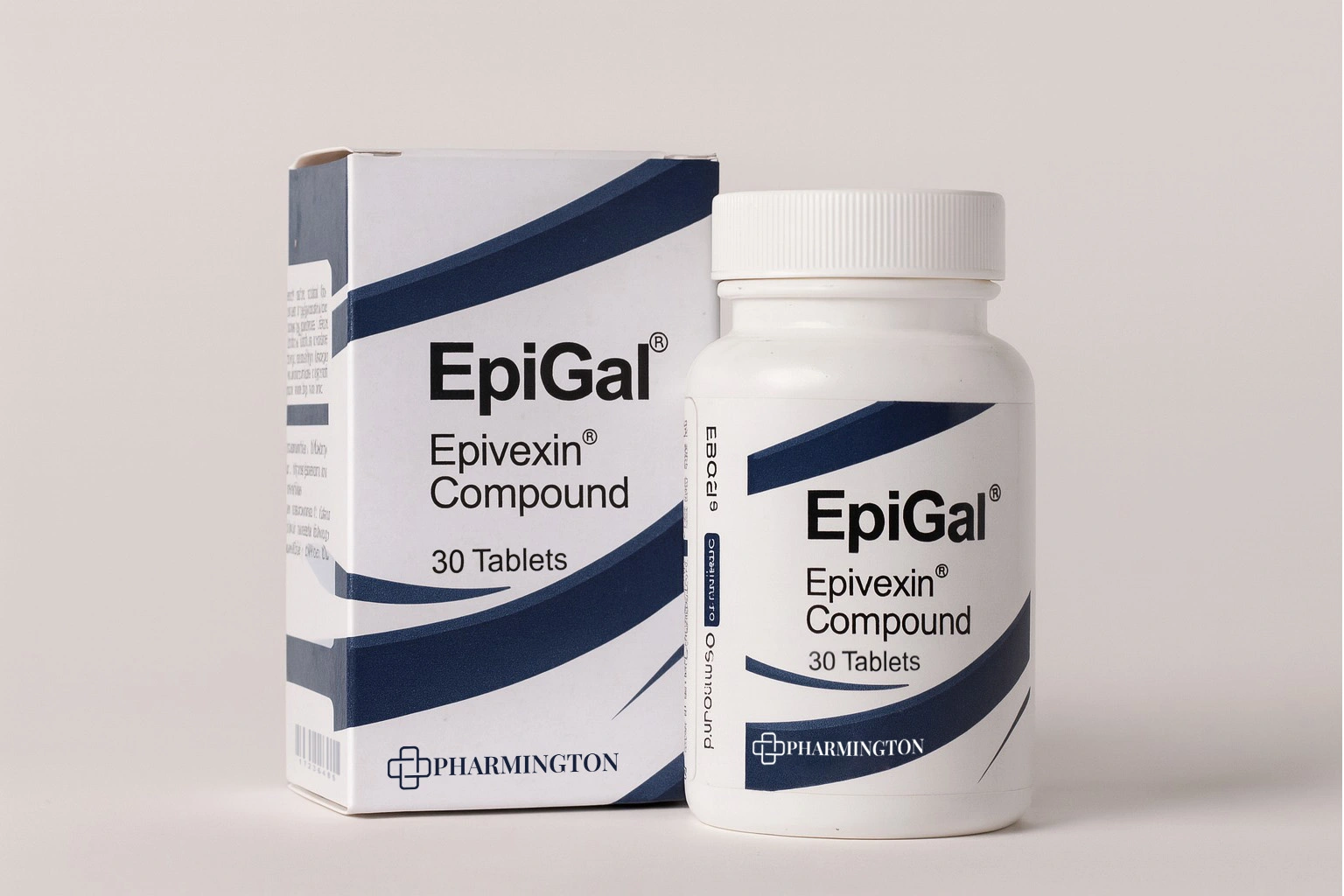
Epigal™ is a clinically proven formula designed to support healthy uterine tissue, reduce fibroid growth, and balance estrogen metabolism. Powered by Epivexin™, complex derived from nature and Vitamin D, Epigal™ helps regulate cellular activity, oxidative stress, and hormonal balance in the female reproductive system.
Key Benefits:
Supports uterine health and normal cell function
Helps modulate estrogen metabolism
Reduces oxidative stress and inflammation
Promotes hormonal balance and comfort
Scientifically backed EGCG complex
Active Ingredients (per tablet):
Epivexin™ compound with Vit D
Suggested Use:
Take 2 tablet twice daily with meals, or as directed by your healthcare provider.
Free From: Gluten, lactose, hormones, artificial colors, and preservatives
£32.00
Introduction
Uterine medical care remains an important concern in women’s health, particularly in relation to estrogen-dependent tissue disorders such as uterine fibroids, endometrial hyperplasia, and chronic pelvic discomfort. Despite advances in gynecologic pharmacotherapy and surgical interventions, many clinicians continue to face limitations related to long-term safety, hormonal disruption, and patient tolerance. As a result, increasing scientific attention has been directed toward evidence-based nutritional and bioactive compounds that support uterine tissue integrity without directly interfering with endocrine signaling.
Epigal® Oral Tablets represent a modern formulation developed to support uterine health through molecular pathways associated with cellular regulation, oxidative
balance, and estrogen metabolism. Built around an advanced EGCG-based complex (Epivexin®) in combination with Vitamin D, Epigal® has been designed to align with current scientific
understanding of non-hormonal tissue support. This article provides a comprehensive scientific review of the biological rationale, mechanistic foundations, and clinical relevance of Epigal® for professionals seeking clarity beyond conventional supplement narratives.
The uterus is a hormone responsive organ characterized by continuous cellular remodeling throughout a woman’s reproductive life. Estrogen plays a central role in regulating endometrial proliferation, vascularization, and smooth muscle activity. Under physiological conditions, estrogen-mediated growth is counterbalanced by progesterone and local apoptotic signaling.(1)
However, disruptions in estrogen metabolism and signaling pathways can result in excessive cellular proliferation, particularly within smooth muscle cells of the myometrium. Such
dysregulation has been strongly associated with benign uterine conditions, including fibroid formation. Importantly, this does not always reflect elevated serum estrogen levels, but rather altered local metabolism, receptor sensitivity, and inflammatory microenvironments. (2)
This distinction between systemic estrogen levels and localized dysregulation of estrogen metabolism within uterine tissue has significant therapeutic implications.
Supporting normal estrogen metabolism and tissue-level regulation—without suppressing systemic hormone production— represents a promising strategy in integrative gynecologic care. (3)
Epigallocatechin gallate (EGCG) is a polyphenolic catechin predominantly derived from Camellia sinensis. Among polyphenols, EGCG has been extensively investigated for its antioxidant, anti-inflammatory, and cell-regulatory properties. (4)
At the cellular level, EGCG interacts with multiple signaling pathways, including MAPK, PI3K/Akt, and NF-κB, which are directly involved in proliferation, apoptosis, and inflammatory response modulation. (5)
Several experimental and observational studies have highlighted EGCG’s ability to influence abnormal smooth muscle cell behavior. Uterine fibroids, composed primarily of smooth muscle cells and extracellular matrix, exhibit altered apoptotic resistance and increased oxidative stress markers.
EGCG has demonstrated the capacity to:
These properties establish EGCG as a scientifically credible compound for uterine tissue support when delivered in a clinically appropriate form. (6)
One of the primary limitations of isolated EGCG supplementation is bioavailability. EGCG is inherently unstable in gastrointestinal conditions and is subject to rapid metabolic degradation. Consequently, the clinical relevance of EGCG depends heavily on formulation strategy.
Epivexin®, the proprietary compound within Epigal®, has been engineered to enhance EGCG stability and cellular uptake. Through controlled complexation and supportive cofactors,
Epivexin® aims to preserve biological activity across digestion and systemic circulation.
By improving absorption efficiency, Epivexin® allows lower concentrations of active compounds to achieve meaningful cellular exposure, reducing the likelihood of gastrointestinal intolerance while maintaining efficacy. This formulation-focused approach aligns with modern pharmacokinetic principles increasingly applied in bio pharmacy science. (7)
Vitamin D has emerged as a critical regulator beyond its traditional role in calcium homeostasis. Within reproductive tissues, Vitamin D receptors (VDRs) are widely expressed in endometrial and myometrial cells.
Vitamin D contributes to:
Epidemiological data have consistently demonstrated associations between Vitamin D
insufficiency and increased prevalence of uterine tissue abnormalities. While causality remains under investigation, the biological plausibility is supported by mechanistic evidence. (8)
When combined with EGCG, Vitamin D appears to amplify antioxidant and anti-inflammatory signaling, creating a cooperative biochemical environment that favors tissue stability and regulated cell turnover. This synergy represents a foundational rationale for Epigal®’s dual- component formulation. (9)
Oxidative stress has been increasingly recognized as a contributing factor in chronic gynecologic discomfort and tissue dysregulation. Elevated reactive oxygen species levels can stimulate
inflammatory cascades, alter extracellular matrix composition, and disrupt vascular signaling within the uterus.
EGCG-rich formulations such as Epigal® address this challenge by:
These effects are particularly relevant for women experiencing non-specific uterine discomfort where standard imaging and hormonal assessments remain inconclusive. (10)
A critical distinction must be emphasized: Epigal® is not a hormonal agent. Instead, it supports pathways involved in estrogen metabolism and receptor regulation. This approach avoids direct endocrine suppression while addressing estrogen-related tissue sensitivity.
Supporting healthy estrogen metabolism involves:
Through antioxidant modulation and cellular regulation, Epigal® aligns with this non-disruptive, physiology-respecting strateg. (11)
From a clinical perspective, safety and tolerability are essential considerations. Epigal® is formulated as a dietary supplement and is free from:
Available safety data on EGCG and Vitamin D, within recommended dosing ranges, suggest favorable tolerability for long-term supportive use. Nevertheless, clinical judgment and individualized assessment remain paramount, particularly in patients with complex medical histories. (12)
In contemporary women’s health practice, there is growing interest in integrative strategies that complement conventional diagnostics and interventions. Epigal® is considered within this context—not as a therapeutic replacement, but as a scientifically rational adjunct designed to support uterine tissue health and cellular balance.
Its formulation reflects a convergence of nutritional science, molecular biology, and gynecologic insight, offering clinicians a non-invasive option grounded in biochemical plausibility.
Epigal® Oral Tablets exemplify an evolving category of evidence based formulations tailored to the unique physiological demands of uterine health. By combining an advanced EGCG complex (Epivexin®) with Vitamin D, Epigal® addresses key biological processes implicated in estrogen-dependent tissue regulation, oxidative stress, and inflammatory signaling.
Rather than pursuing hormonal suppression, Epigal® supports intrinsic regulatory mechanisms essential for long-term tissue integrity. While further clinical investigation will enhance
understanding, current scientific knowledge provides a compelling rationale for its role in integrative women’s health strategies.
What is Epigal® used for?
Epigal® is designed to support uterine health by promoting normal cellular regulation, balanced estrogen metabolism, and oxidative stress reduction. It is not intended to diagnose or treat
specific medical conditions.
Is Epigal® a hormonal medicine?
No. Epigal® is a non-hormonal natural formulation. It does not supply hormones or suppress endocrine function, making it suitable for women seeking hormone-free support.
Who may benefit most from Epigal®?
Epigal® is appropriate for women interested in evidence-based, non-invasive uterine support, particularly those concerned with estrogen-sensitive tissue balance. Consultation with a healthcare professional is recommended prior to use.
DOI: 10.1056/NEJMra1209993
DOI: 10.1016/j.ogc.2006.02.002
DOI: 10.1016/S0015-0282(01)01759-9
DOI: 10.1016/j.lfs.2007.06.011
Molecular Nutrition & Food Research, 2011;55(6):819–831.
DOI: 10.1002/mnfr.201000406
DOI: 10.1016/j.ajog.2009.09.047
Green tea catechin, epigallocatechin-3-gallate: mechanisms, perspectives and clinical applications.
Biochemical Pharmacology, 2011;82(12):1807–1821.
DOI: 10.1016/j.bcp.2011.07.093
Vitamin D3 inhibits proliferation of human uterine leiomyoma cells.
Biology of Reproduction, 2013;88(1):1–10.
DOI: 10.1095/biolreprod.112.104703
Vitamin D and regulation of immune and inflammatory responses.
Frontiers in Immunology, 2012;3:356.
DOI: 10.3389/fimmu.2012.00356
Dose-dependent pharmacokinetics and tolerability of green tea polyphenols in humans.
Clinical Cancer Research, 2003;9(9):3312–3319.
PMID: 12960117
Dose-dependent pharmacokinetics and tolerability of green tea polyphenols in humans.
Clinical Cancer Research, 2003;9(9):3312–3319.
PMID: 12960117
Hepatotoxicity from green tea: A review of the literature and two unpublished cases.
European Journal of Clinical Pharmacology, 2009;65(4):331–341.
DOI: 10.1007/s00228-008-0610-7
© 2025 Pharmington. All rights reserved.