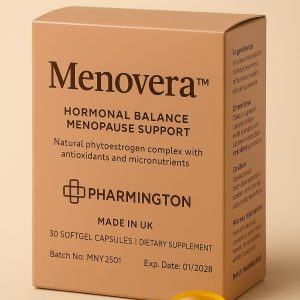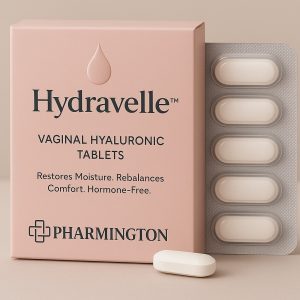

Hydravelle™ Intimate Wash is a dermatologically tested, pH-balanced, and soap-free cleanser designed to maintain the natural balance of the intimate area while providing lasting freshness and hydration.
Formulated with hyaluronic acid, lactic acid, and soothing botanical extracts, it gently cleanses without irritation — leaving a feeling of comfort, moisture, and confidence throughout the day.
Key Benefits:
Maintains the natural vaginal pH (3.8–4.5)
Prevents dryness and irritation
Enriched with moisturizing hyaluronic acid
Supports healthy microflora with lactic acid
Hypoallergenic, soap-free, and paraben-free
Active Ingredients:
Aqua, Sodium Lauroyl Sarcosinate, Lactic Acid, Hyaluronic Acid, Aloe Vera Extract, Chamomile Extract, Panthenol, Glycerin.
Usage:
Apply a small amount, gently cleanse the external intimate area, and rinse with lukewarm water. Use daily.
£15.10
Intimate hygiene represents a fundamental aspect of women’s daily self‑care, yet it requires a level of formulation sensitivity that differs significantly from conventional skin cleansing. The vulvar and perineal regions are anatomically and functionally distinct, characterized by thinner epithelium, increased moisture, friction, and close interaction with the vaginal microenvironment. As a result, exposure to inappropriate cleansing products may contribute to dryness, irritation, and subjective discomfort.
Historically, standard soap‑based cleansers have been widely used for intimate hygiene despite substantial differences in pH and surfactant composition compared to physiological conditions. Increasing dermatological and gynecological evidence suggests that maintaining the natural acidic environment and preserving the skin barrier are critical for long‑term tolerance and comfort (1).
Hydravelle™ Intimate Wash has been developed in response to these considerations. As a soap‑free, pH‑balanced cleanser enriched with hyaluronic acid and lactic acid, it is designed to support daily external intimate hygiene while aligning with physiological principles rather than overriding them.
The vulvovaginal environment is regulated by a complex interaction between epithelial tissue, resident microflora, and biochemical factors. In healthy premenopausal women, vaginal pH typically ranges from 3.8 to 4.5, a level primarily maintained by Lactobacillus species that produce lactic acid through glycogen metabolism (2).
This acidic pH is widely recognized as a key protective factor, as it limits the proliferation of pathogenic microorganisms and supports microbiological stability. Deviations from this physiological range have been associated with increased susceptibility to irritation, discomfort, and altered vaginal ecology (3).
Although intimate cleansing products are intended for external use, repeated exposure to alkaline or harsh formulations may influence the local environment by increasing surface pH and compromising skin tolerance. Consequently, pH‑aligned formulations are increasingly regarded as essential components of gentle intimate hygiene (4).
Effective cleansing must strike a balance between removal of impurities and preservation of the epidermal barrier. The stratum corneum plays a pivotal role in limiting transepidermal water loss and protecting underlying tissues. Disruption of this barrier has been associated with dryness, sensitivity, and irritant reactions.
In the vulvar area, the risk of barrier disruption is heightened due to frequent washing, occlusion, tight clothing, and mechanical stress. Soap‑based cleansers, which often exhibit an alkaline pH and strong surfactant activity, have been shown to remove essential lipids from the skin surface, thereby weakening barrier integrity (5).
Soap‑free cleansing systems, such as those used in Hydravelle™, are designed to offer effective cleansing while minimizing lipid extraction and protein denaturation. This approach aligns with dermatological recommendations that emphasize barrier preservation as a cornerstone of cutaneous comfort and tolerance (6).
Hyaluronic acid is a naturally occurring glycosaminoglycan present throughout connective tissues and the extracellular matrix of the skin. Its exceptional hygroscopic capacity allows it to bind large amounts of water, contributing to tissue hydration, elasticity, and viscoelasticity (7).
Topical hyaluronic acid has been extensively studied in dermatology and cosmetic science, where it has demonstrated the ability to improve skin hydration and reduce subjective sensations of dryness and tightness (8). These properties are particularly relevant in the vulvar region, where dryness may arise from environmental factors, hormonal changes, aging, or frequent cleansing.
Within Hydravelle™, hyaluronic acid functions as a supportive moisturizing agent for the external intimate skin. Its role is limited to enhancing hydration and comfort following cleansing, without exerting pharmacological or systemic effects, consistent with its cosmetic classification (9).
Lactic acid constitutes the predominant organic acid in the healthy vaginal ecosystem and is central to the maintenance of physiological vaginal pH. Beyond its acidifying role, lactic acid has been associated with stabilization of the vaginal microenvironment and support of microbial balance (10).
In intimate hygiene formulations, lactic acid is commonly incorporated as a pH‑adjusting component rather than as an antimicrobial agent. Scientific literature supports the use of lactic acid to align product pH with physiological values, thereby reducing the likelihood of pH elevation during washing (11).
The inclusion of lactic acid in Hydravelle™ reflects this formulation rationale. By supporting an acidic pH range consistent with physiological conditions, the product aims to enhance tolerance and comfort while avoiding therapeutic or medicinal claims (12).
Botanical ingredients have long been used in dermatological and cosmetic formulations to support skin comfort. In Hydravelle™, selected extracts are incorporated to complement the core cleansing and moisturizing components.
Aloe vera is widely recognized for its soothing and hydrating properties and has been used in various formulations intended for sensitive or irritation‑prone skin (13). Chamomile extract has similarly been studied for its comfort‑enhancing and calming effects in dermatological applications (14).
Additional ingredients such as panthenol and glycerin contribute to moisture retention and barrier support. Collectively, these components enhance the sensory profile and tolerability of the formulation without implying therapeutic activity (15).
The effectiveness and safety of an intimate wash depend not solely on individual ingredients but on overall formulation design. Hydravelle™ has been developed based on several key principles:
Such formulation strategies are consistent with contemporary cosmetic science, which emphasizes prevention of irritation and long‑term comfort over aggressive cleansing or pharmacological intervention (16).
Hydravelle™ Intimate Wash is intended exclusively for external use and does not contain hormones, antibiotics, antifungals, or substances associated with systemic absorption. Its formulation does not aim to treat, prevent, or diagnose any medical condition.
From a safety standpoint, cosmetic intimate cleansers formulated within physiological pH ranges and free from harsh surfactants are generally regarded as suitable for daily use among individuals without active pathology (17).
Importantly, persistent symptoms such as itching, burning, abnormal discharge, or pain warrant medical evaluation. Intimate hygiene products should be viewed as supportive measures rather than substitutes for professional care (18).
From a consumer perspective, the perceived benefits of intimate hygiene products are closely linked to comfort, freshness, and confidence. While these outcomes are subjective, they significantly influence quality of life and adherence to daily care routines.
From a clinical standpoint, healthcare professionals increasingly advocate for gentle, physiology‑respecting products as part of a broader strategy for maintaining vulvar comfort. In this context, pH‑balanced, soap‑free cleansers may serve as appropriate adjuncts to routine hygiene practices, particularly for individuals prone to sensitivity (19).
Hydravelle™ aligns with this contemporary perspective by emphasizing support, tolerance, and daily comfort rather than corrective or therapeutic action.
Is Hydravelle™ intended to treat vaginal infections?
No. Hydravelle™ is a cosmetic product for external intimate hygiene and does not treat or prevent infections (17).
Can Hydravelle™ be used every day?
Yes. Its formulation is designed for gentle daily use, consistent with cosmetic guidelines for intimate cleansers (16).
Is it suitable for sensitive skin?
The soap‑free, hypoallergenic formulation is intended to minimize irritation and support tolerance in sensitive users (6).
Does it interfere with natural microflora?
The product is designed to align with physiological pH and support comfort, not to alter vaginal microflora or exert antimicrobial effects (11).
Scientific advances in dermatology and gynecology have underscored the importance of respecting physiological balance in intimate hygiene. Maintenance of an acidic pH, preservation of the skin barrier, and adequate hydration are now recognized as central elements of long‑term vulvar comfort.
Hydravelle™ Intimate Wash reflects these principles through a carefully designed, pH‑balanced, soap‑free formulation enriched with hyaluronic acid, lactic acid, and comfort‑focused botanical extracts. Positioned as a supportive cosmetic product, it contributes to daily intimate care by aligning with natural biology rather than attempting to modify it.
1. Farage MA, Maibach HI. Vulvar susceptibility to chemical irritation. Contact Dermatitis.
2. Boskey ER, et al. Acid production by vaginal flora and its role in maintaining vaginal health. Am J Obstet Gynecol. PMID: 17109995.
3. Donders GGG. Definition and classification of abnormal vaginal flora. Best Pract Res Clin Obstet Gynaecol.
4. O’Hanlon DE, et al. Lactic acid and vaginal pH. PLoS One. DOI: 10.1371/journal.pone.0002915.
5. Ananthapadmanabhan KP, et al. Skin cleansing: Soap vs syndet. J Clin Aesthet Dermatol.
6. Levin J, Maibach H. Barrier repair and gentle cleansing. Dermatol Ther.
7. Papakonstantinou E, et al. Hyaluronic acid: A key molecule in skin aging. Dermato‑Endocrinology.
8. Pavicic T, et al. Efficacy of topical hyaluronic acid. J Drugs Dermatol.
9. Farage MA, et al. Vulvar dermatology and moisturization. Clin Dermatol.
10. Aldunate M, et al. The protective role of vaginal lactic acid. mBio.
11. Ma B, et al. Formulation considerations in feminine hygiene products. Int J Cosmet Sci.
12. Mendling W. Vaginal microbiota and lactic acid. Arch Gynecol Obstet.
13. Dal’Belo SE, et al. Aloe vera in cosmetic formulations. Skin Pharmacol Physiol.
14. McKay DL, Blumberg JB. Chamomile and skin health. Phytother Res.
15. Lodén M. Role of moisturizers in barrier repair. Am J Clin Dermatol.
16. SCCS Opinion on cosmetic products for intimate hygiene.
17. World Health Organization. Vaginal practices and health.
18. ACOG Practice Bulletin: Vulvovaginal symptoms.
19. Farage MA. Vulvovaginal health and hygiene practices. Int J Womens Health.
© 2025 Pharmington. All rights reserved.