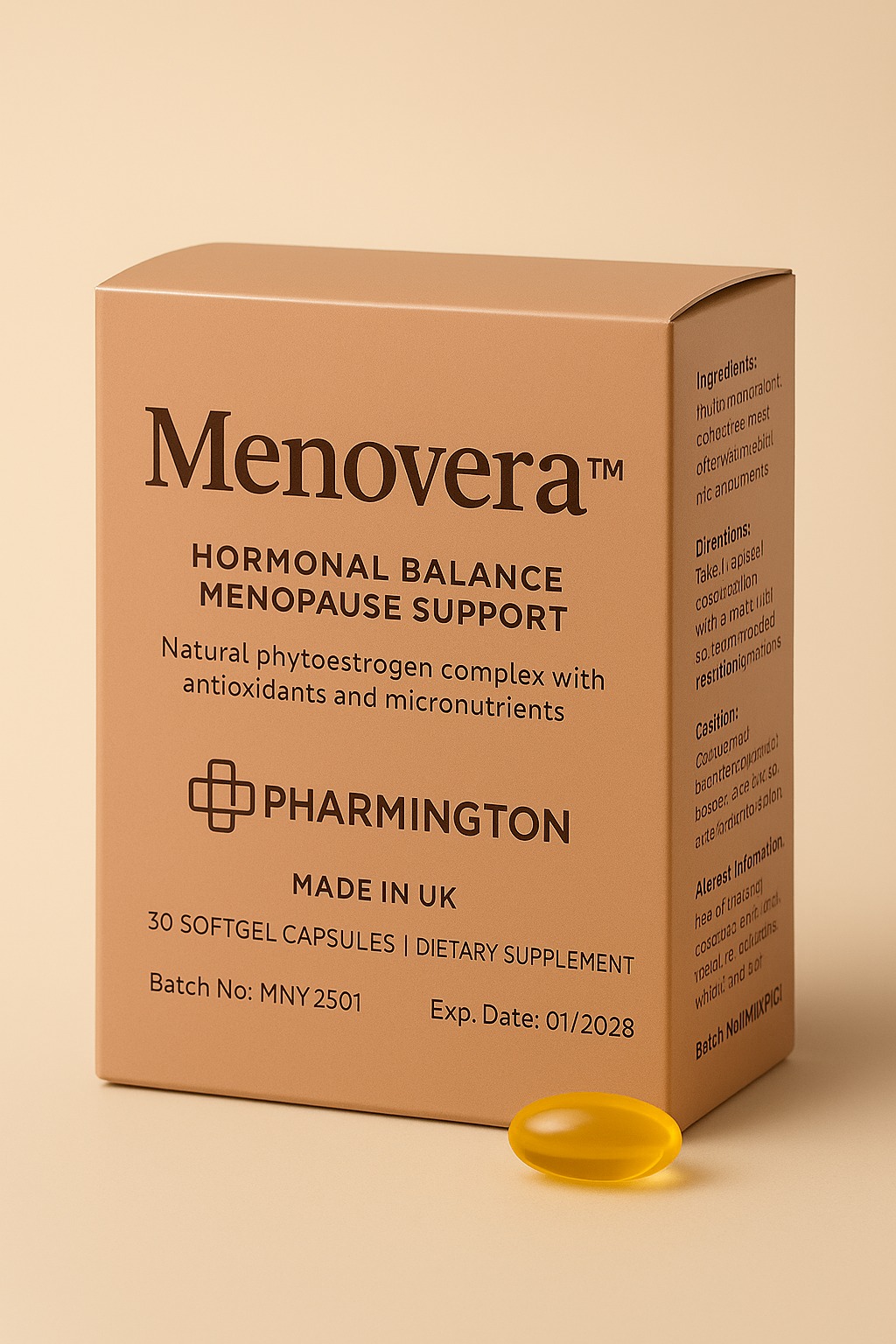
Menovera™ is a comprehensive nutraceutical blend formulated to support hormonal balance, reduce hot flashes and night sweats, and enhance mood and energy during the menopausal transition.
Each softgel combines phytoestrogen-rich botanical extracts, omega-3 fatty acids, and adaptogenic nutrients for holistic comfort and long-term wellness.
Key Benefits:
Relieves common menopause symptoms (hot flashes, irritability, insomnia)
Supports hormonal equilibrium and bone health
Promotes calm mood and cognitive focus
Enhances skin hydration and elasticity
Active Ingredients (per softgel):
Isoflavones (from Soy Extract) – 80 mg
Black Cohosh Extract (2.5% triterpene glycosides) – 40 mg
Evening Primrose Oil (GLA 10%) – 500 mg
Vitamin E (d-Alpha Tocopherol) – 30 IU
Omega-3 (EPA/DHA) – 250 mg total
Magnesium (as Citrate) – 100 mg
Suggested Use:
Take 1 softgel twice daily with meals, or as directed by your healthcare provider.
Free From: Hormones, dairy, gluten, artificial colors, and preservatives.
£15.00
The menopausal transition represents a complex physiological period characterized by fluctuating estrogen levels and widespread systemic effects, including vasomotor symptoms, mood alterations, sleep disturbances, and changes in skin and bone integrity. While hormone replacement therapy remains effective for selected individuals, concerns regarding long‑term safety, contraindications, and patient preference have driven growing interest in evidence‑based, non‑hormonal nutritional strategies for menopausal support. (1)
Contemporary research increasingly highlights the importance of multi‑component nutraceutical formulations that address hormonal balance, inflammatory signaling, neuronal regulation, and cellular oxidative stress simultaneously. This integrative approach aligns with current understanding of menopause as a multifactorial biological transition rather than a single‑pathway deficiency state. (2)
Menovera™ Softgels have been developed as a comprehensive nutraceutical formulation designed to support hormonal equilibrium, reduce common menopausal symptoms such as hot flashes and night sweats, and promote long‑term comfort and wellness. By combining phytoestrogen‑rich botanicals, omega‑3 fatty acids, and essential micronutrients, Menovera™ reflects a science‑driven, non‑hormonal strategy for menopausal health support. (3)
Menopause results from the progressive decline of ovarian follicular activity, leading to reduced estrogen and progesterone production. These hormonal shifts affect central thermoregulation, neurotransmitter balance, bone remodeling, lipid metabolism, and skin structure. Importantly, symptom severity does not always correlate directly with circulating estrogen levels, but rather with tissue sensitivity, receptor activity, and local inflammatory and oxidative environments. (4)
Estrogen receptors (ERα and ERβ) are widely distributed throughout the brain, vasculature, bone, and skin. During menopause, altered estrogen signaling can disrupt serotonin and norepinephrine pathways, contributing to vasomotor instability, mood changes, and sleep irregularities. Supporting balanced estrogenic activity at the receptor and tissue level—without introducing exogenous hormones—represents a key objective in modern menopausal care. (5)
Isoflavones are naturally occurring plant‑derived polyphenols with structural similarity to endogenous estrogens, allowing them to interact selectively with estrogen receptors, particularly ERβ. This preferential binding is associated with milder estrogenic activity and a modulatory rather than stimulatory effect on estrogen‑responsive tissues. (6)
Clinical and epidemiological data suggest that isoflavone intake may contribute to:
• Reduction in the frequency and severity of hot flashes
• Support of bone mineral density
• Improvement in lipid profiles
• Modulation of neuroendocrine signaling related to mood and cognition
These properties establish soy‑derived isoflavones as a scientifically supported component of non‑hormonal menopausal support formulations. (7)
Black cohosh (Cimicifuga racemosa) has been extensively studied for its role in managing menopausal vasomotor symptoms. Unlike hormonal agents, black cohosh does not demonstrate direct estrogen receptor agonism but appears to influence serotonergic pathways and central thermoregulatory centers in the hypothalamus. (8)
Standardized extracts containing triterpene glycosides have shown potential benefits in reducing:
This unique mechanism makes black cohosh particularly relevant for women seeking hormone‑free symptom relief. (9)
Omega‑3 fatty acids, particularly EPA and DHA, play a critical role in modulating inflammatory signaling and maintaining neuronal membrane fluidity. During menopause, increased systemic inflammation has been associated with fatigue, mood fluctuations, and cardiovascular risk alterations. (10)
Supplementation with omega‑3 fatty acids has been associated with:
In Menovera™, omega‑3 fatty acids contribute to both symptomatic relief and long‑term wellness support. (11)
Evening primrose oil is a rich source of gamma‑linolenic acid (GLA), an omega‑6 fatty acid involved in prostaglandin synthesis and skin barrier function. Declining estrogen levels during menopause are often accompanied by reduced skin elasticity and hydration, as well as increased susceptibility to inflammatory discomfort. (12)
GLA has demonstrated potential benefits in:
This makes evening primrose oil a valuable supportive ingredient in menopausal formulations. (13)
Vitamin E functions as a lipid‑soluble antioxidant, protecting cell membranes from oxidative damage and supporting skin integrity. Oxidative stress is increasingly recognized as a contributing factor to menopausal symptom severity and accelerated tissue aging. (14)
Magnesium plays a fundamental role in neuromuscular function, neurotransmitter regulation, and sleep quality. Adequate magnesium status has been associated with improved relaxation, reduced fatigue, and enhanced stress resilience—factors highly relevant during the menopausal transition. (15)
The formulation strategy behind Menovera™ reflects a systems‑based approach to menopausal health. By combining phytoestrogens, botanicals, fatty acids, antioxidants, and essential minerals, the formulation targets multiple physiological pathways simultaneously:
This integrative synergy enhances biological plausibility and supports sustained comfort without endocrine suppression. (16)
Menovera™ is formulated as a non‑hormonal nutraceutical and does not contain synthetic hormones or hormone precursors. Its ingredients have been widely studied within recommended intake ranges and demonstrate favorable tolerability profiles when used appropriately. (17)
The formulation is free from dairy, gluten, artificial colors, and preservatives, aligning with contemporary consumer and regulatory expectations. As with all nutraceuticals, individualized assessment and professional guidance are recommended, particularly for women with complex medical histories. (18)
From a clinical standpoint, Menovera™ is best positioned as a supportive adjunct within integrative menopausal care. It is not intended to replace medical evaluation or prescribed therapies but rather to complement lifestyle, nutritional, and clinical strategies aimed at enhancing quality of life during menopause. (19)
Menovera™ Softgels exemplify a modern, evidence‑informed nutraceutical approach to menopausal support. Through the strategic combination of phytoestrogens, omega‑3 fatty acids, botanicals, and essential micronutrients, Menovera™ addresses key biological processes underlying menopausal symptoms without direct hormonal intervention.
By supporting intrinsic regulatory mechanisms related to estrogen signaling, inflammation, and cellular resilience, Menovera™ offers a scientifically grounded option for women seeking non‑hormonal, long‑term wellness support during the menopausal transition. (20)
1. What is Menovera™ used for?
Menovera™ is designed to support hormonal balance, reduce common menopausal symptoms, and promote overall comfort and well‑being. It is not intended to diagnose or treat medical conditions. (21)
2. Is Menovera™ a hormonal product?
No. Menovera™ is a hormone‑free nutraceutical formulation and does not interfere directly with endocrine hormone production. (22)
3. Who may benefit most from Menovera™?
Menovera™ is suitable for women seeking evidence‑based, non‑hormonal support during menopause. Consultation with a healthcare professional is recommended prior to use. (23)
1. Santoro N. Perimenopause: From research to practice. Journal of Women’s Health. 2016;25(4):332–339. DOI: 10.1089/jwh.2015.5556
2. Burger HG. Hormonal changes in the menopause transition. Endocrine Reviews. 1999;20(4):478–504. DOI: 10.1210/edrv.20.4.0377
3. Rossouw JE et al. Risks and benefits of estrogen therapy. JAMA. 2002;288(3):321–333. PMID: 12117397
4. Freedman RR. Physiology of hot flashes. American Journal of Human Biology. 2001;13(4):453–464. DOI: 10.1002/ajhb.1089
5. Brinton RD. Estrogen regulation of neural systems. Endocrine Reviews. 2009;30(1):1–41. DOI: 10.1210/er.2008-0011
6. Kuiper GGJM et al. Interaction of estrogenic compounds with estrogen receptors. Endocrinology. 1998;139(10):4252–4263. DOI:
10.1210/endo.139.10.6216
7. Tempfer CB et al. Soy isoflavones in menopausal women. Obstetrics & Gynecology. 2007;110(5):1110–1120. DOI:
10.1097/01.AOG.0000286772.59585.2e
8. Raus K et al. Black cohosh mechanisms of action. Gynecological Endocrinology. 2013;29(6):576–579. DOI:
10.3109/09513590.2013.775377
9. Wuttke W et al. Black cohosh: Clinical evidence. Phytomedicine. 2014;21(3):247–252. DOI: 10.1016/j.phymed.2014.01.002
10. Calder PC. Omega‑3 fatty acids and inflammation. Biochimica et Biophysica Acta. 2015;1851(4):469–484. DOI:
10.1016/j.bbalip.2014.08.001
11. Bloch MH, Hannestad J. Omega‑3 fatty acids for mood. Molecular Psychiatry. 2012;17(12):1272–1282. DOI: 10.1038/mp.2011.157
12. Morse PF et al. GLA and inflammatory modulation. Clinical Rheumatology. 1989;8(4):449–454. DOI: 10.1007/BF02033371
13. Chenoy R et al. Evening primrose oil in menopause. BMJ. 1994;308:501–503. PMID: 8124121
14. Traber MG, Stevens JF. Vitamin E mechanisms. The American Journal of Clinical Nutrition. 2011;93(4):727–734. DOI:
10.3945/ajcn.110.006199
15. Gröber U et al. Magnesium in health and disease. Nutrients. 2015;7(9):8199–8226. DOI: 10.3390/nu7095388
16. Panay N et al. Non‑hormonal management of menopause. Climacteric. 2019;22(2):129–138. DOI: 10.1080/13697137.2018.1551344
17. Borrelli F, Ernst E. Safety of herbal medicines. Drug Safety. 2010;33(7):517–542. DOI: 10.2165/11532380-000000000-00000
18. EFSA Panel on Dietetic Products. Scientific opinion on ingredients. EFSA Journal. 2012;10(7):2813
19. Stuenkel CA et al. Menopause management guidelines. Journal of Clinical Endocrinology & Metabolism. 2015;100(11):3975–4011. DOI: 10.1210/jc.2015-2236
20. Davis SR et al. Menopause and quality of life. Lancet. 2015;386(9997):1231–1238. DOI: 10.1016/S0140-6736(15)00297-4
© 2025 Pharmington. All rights reserved.