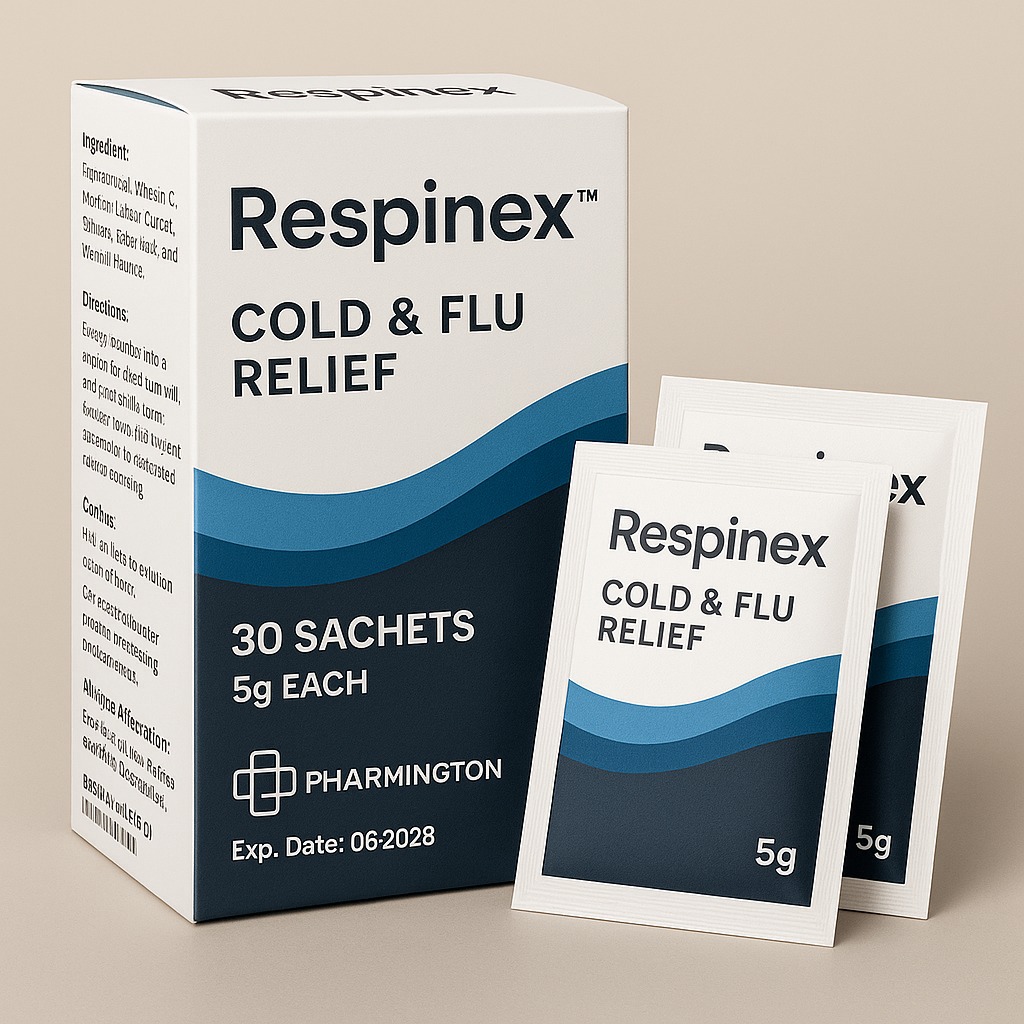
Respinex™ is a fast-acting, effervescent formula developed to clear mucus, ease breathing, and relieve cold and flu symptoms. Each sachet contains pharmaceutical-grade N-acetylcysteine (NAC) with immune-supportive vitamins and soothing botanical extracts — designed for rapid dissolution, pleasant taste, and high bioavailability.
Key Benefits:
Breaks down and clears mucus for easier breathing
Supports recovery from cold, flu, and respiratory infections
Helps reduce oxidative stress and inflammation
Boosts antioxidant protection with Vitamin C and Zinc
Refreshing lemon-menthol flavor
Active Ingredients (per sachet):
N-Acetylcysteine (NAC) – 600 mg
Vitamin C – 500 mg
Zinc (as Gluconate) – 10 mg
Menthol & Lemon Extract – 50 mg
Stevia Natural Sweetener – 20 mg
Suggested Use:
Dissolve 1 sachet in a glass of water, once or twice daily, or as directed by your physician.
Free From: Artificial colors, added sugar, lactose, and gluten.
£35.00
Acute upper respiratory tract infections, including the common cold and influenza‑like illnesses, are frequently associated with excessive mucus production, airway congestion, oxidative stress, and inflammatory activation. These mechanisms collectively contribute to cough, dyspnea, chest discomfort, and delayed recovery. Supportive interventions targeting mucus viscosity and redox balance represent a cornerstone of symptomatic respiratory care. (1)
N‑acetylcysteine (NAC) is a well‑established mucolytic and antioxidant agent with a long history of clinical use in respiratory medicine. Its role in reducing mucus viscosity and replenishing intracellular glutathione has made it particularly relevant in conditions characterized by oxidative stress and impaired mucociliary clearance. (2)
Respinex™ Powder in Sachets has been developed as a rapidly dissolving effervescent formulation delivering pharmaceutical‑grade NAC combined with vitamin C, zinc, and soothing botanical extracts. This multi‑component strategy is intended to support respiratory comfort, immune responsiveness, and recovery during acute cold and flu episodes. (3)
Physiological mucus plays a protective role in the respiratory tract by trapping pathogens and particulates. During viral or bacterial respiratory infections, however, mucus production increases and its rheological properties change, leading to higher viscosity and impaired clearance. This contributes to airflow limitation and persistent cough. (4)
Concurrently, respiratory infections trigger the generation of reactive oxygen species (ROS) by immune and epithelial cells. Excessive oxidative stress not only damages epithelial tissue but also further increases mucus thickness through oxidative cross‑linking of mucin proteins. Effective respiratory support therefore requires simultaneous modulation of mucus structure and oxidative burden. (5)
N‑acetylcysteine is a thiol‑containing compound derived from the amino acid cysteine. Its free sulfhydryl group enables direct disruption of disulfide bonds within mucoproteins, resulting in reduced mucus viscosity and enhanced mucociliary clearance. This mucolytic activity forms the basis of its widespread use in respiratory disorders. (6)
Beyond its mechanical effects on mucus, NAC serves as a precursor to glutathione, the body’s principal intracellular antioxidant. By restoring glutathione levels, NAC contributes to redox homeostasis, protects respiratory epithelial cells from oxidative injury, and may modulate inflammatory signaling pathways involved in respiratory infections. (7)
Although NAC is not an antiviral agent, clinical and mechanistic evidence suggests that it may support recovery during viral respiratory infections by improving airway clearance and reducing oxidative stress. Studies in influenza‑like illnesses have demonstrated reductions in symptom severity and duration, particularly related to cough and chest congestion. (8)
NAC’s supportive role is further reinforced by its favorable safety profile and compatibility with symptomatic cold and flu care. These properties position NAC as a valuable adjunct in the management of acute respiratory discomfort rather than as a replacement for medical evaluation or targeted therapies. (9)
Vitamin C is a water‑soluble antioxidant that accumulates in immune cells and plays a role in leukocyte function, epithelial barrier integrity, and cytokine regulation. During respiratory infections, vitamin C requirements increase, and supplementation has been associated with modest reductions in cold duration and severity. (10)
Zinc is an essential trace element involved in innate and adaptive immune responses. Zinc ions influence antiviral activity, mucosal immunity, and inflammatory balance. Zinc supplementation, particularly when provided during early stages of infection, has been shown to reduce symptom duration in common cold episodes. (11)
The inclusion of vitamin C and zinc in Respinex™ supports immune competence and complements the antioxidant role of NAC within the formulation. (12)
Menthol is widely used for its cooling sensation and perceived relief of nasal congestion. It activates transient receptor potential (TRPM8) channels, producing a subjective sensation of improved airflow without altering actual airway resistance. This effect contributes to patient comfort during respiratory infections. (13)
Lemon extract provides both flavor enhancement and additional polyphenolic compounds with mild antioxidant properties. Together, menthol and lemon extract improve palatability and compliance while supporting symptomatic relief during acute respiratory discomfort. (14)
Effervescent sachet formulations offer several practical and pharmacokinetic advantages, including rapid dissolution, uniform dispersion of active ingredients, and ease of administration in individuals experiencing swallowing discomfort during illness. Dissolved NAC demonstrates prompt gastrointestinal absorption, supporting timely systemic and local effects. (15)
Respinex™ is formulated without added sugars, artificial colors, lactose, or gluten, aligning with contemporary dietary considerations. The use of stevia as a natural sweetener enhances tolerability without contributing to glycemic load, which may be relevant during periods of illness‑related metabolic stress. (16)
The combined formulation in Respinex™ addresses multiple pathophysiological aspects of cold and flu‑related respiratory symptoms:
• Mucus breakdown and clearance (NAC)
• Reduction of oxidative stress (NAC, vitamin C)
• Immune system support (vitamin C, zinc)
• Sensory and symptomatic relief (menthol, lemon extract)
This multi‑target approach reflects current understanding of respiratory infections as complex, multi‑factorial processes rather than isolated mucosal events. (17)
N‑acetylcysteine, vitamin C, and zinc have all been extensively studied and demonstrate favorable safety profiles when used within recommended intake ranges. Gastrointestinal discomfort may occur in some individuals, but serious adverse effects are uncommon. (18)
Respinex™ is positioned as a non‑prescription nutraceutical product and does not claim to prevent, treat, or cure infectious diseases. It is intended to support respiratory comfort and immune function as part of a broader self‑care or clinician‑guided approach. (19)
From a clinical perspective, Respinex™ may be considered a supportive option during episodes of acute cold and flu, particularly in individuals experiencing chest congestion, thick mucus, and oxidative stress–related fatigue. It may be used alongside standard dietary measures and adequate hydration. (20)
Healthcare professionals remain best placed to advise on individual suitability, especially for patients with chronic respiratory conditions or those using concurrent medications. (21)
Respinex™ Powder in Sachets represents a scientifically grounded, multi‑ingredient approach to supporting respiratory comfort during acute cold and flu episodes. Anchored by the mucolytic and antioxidant properties of N‑acetylcysteine and complemented by immune‑supportive micronutrients, Respinex™ targets key mechanisms underlying respiratory congestion and discomfort.
By focusing on mucus clearance, oxidative balance, and symptomatic relief without hormonal or pharmacologically aggressive interventions, Respinex™ aligns with contemporary, evidence‑informed strategies for adjunctive respiratory support. (22)
What is Respinex™ used for?
Respinex™ is designed to support mucus clearance, ease breathing, and provide antioxidant and immune support during cold and flu‑related respiratory discomfort. It is not intended as a treatment for infections. (23)
Does Respinex™ contain antibiotics or antiviral drugs?
No. Respinex™ does not contain antibiotics or antiviral medications. Its ingredients support physiological mechanisms such as mucus clearance and antioxidant protection. (24)
Who can benefit most from Respinex™?
Respinex™ may be suitable for adults experiencing chest congestion or thick mucus during acute respiratory infections. Professional advice is recommended for individuals with underlying medical conditions. (25)
1. Eccles R. Mechanisms of symptoms of upper respiratory tract infections. British Journal of General Practice. 2005;55(512):921–928. PMID: 16378548
2. Dekhuijzen PN. Antioxidant properties of N‑acetylcysteine. European Respiratory Journal. 2004;23(4):629–636. DOI: 10.1183/09031936.04.00016804
3. Millea PJ. N‑acetylcysteine: Multiple clinical applications. American Family Physician. 2009;80(3):265–269. PMID: 19678680
4. Rogers DF. Physiology of airway mucus secretion. European Respiratory Journal. 2007;29(3):554–567. DOI: 10.1183/09031936.00139306
5. Cantin AM et al. Oxidant‑mediated lung injury. Proceedings of the American Thoracic Society. 2010;7(2):131–138. DOI: 10.1513/pats.200909-100JS
6. Sheffner AL et al. The reduction in viscosity of mucoproteins by acetylcysteine. American Review of Respiratory Disease. 1964;90:721–729. PMID: 14232955
7. Rushworth GF, Megson IL. Existing evidence for use of NAC. British Journal of Pharmacology. 2014;171(15):3577–3592. DOI: 10.1111/bph.12620
8. De Flora S et al. NAC in influenza prevention. European Respiratory Journal. 1997;10(7):1535–1541. DOI: 10.1183/09031936.97.10071535
9. Aldini G et al. NAC as an antioxidant and anti‑inflammatory agent. Clinics. 2018;73:e355. DOI: 10.6061/clinics/2018/e355
10. Hemilä H. Vitamin C and respiratory infections. Nutrients. 2017;9(11):1211. DOI: 10.3390/nu9111211
11. Science M et al. Zinc for the treatment of the common cold. CMAJ. 2012;184(10):E551–E561. DOI: 10.1503/cmaj.111990
12. Maggini S et al. Micronutrients and immune system. British Journal of Nutrition. 2018;122(5):437–460. DOI:
10.1017/S0007114518001528
13. Eccles R. Menthol and airway sensation. Rhinology. 2003;41(2):107–114. PMID: 12868306
14. Wang H et al. Lemon polyphenols and oxidative stress. Food Chemistry. 2016;210:419–426. DOI: 10.1016/j.foodchem.2016.04.092
15. Schenck C et al. Bioavailability of effervescent formulations. International Journal of Pharmaceutics. 2010;390(2):198–202. DOI: 10.1016/j.ijpharm.2010.02.033
16. Gardner C et al. Non‑nutritive sweeteners review. Nutrition Reviews. 2012;70(2):77–91. DOI: 10.1111/j.1753-4887.2011.00476.x
17. Wark PA, Gibson PG. Respiratory infection mechanisms. American Journal of Respiratory and Critical Care Medicine. 2006;173(11):1186–1193. DOI: 10.1164/rccm.200508-1239PP
18. Kelly GS. Clinical applications of NAC. Alternative Medicine Review. 1998;3(2):114–127. PMID: 9568441
19. EFSA Panel on Dietetic Products. NAC and micronutrient safety. EFSA Journal. 2014;12(10):3759
20. Fashner J et al. Treatment of the common cold. American Family Physician. 2012;86(2):153–159. PMID: 22963024
21. NICE. Respiratory tract infections guidance. UK. 2019
22. Sadowska AM et al. NAC in respiratory medicine. Chest. 2007;131(6):1878–1886. DOI: 10.1378/chest.06-2173
23. Eccles R. Symptomatic management of colds. Journal of Clinical Pharmacy and Therapeutics. 2006;31(2):103–108. DOI: 10.1111/j.1365-2710.2006.00726.x
24. WHO. Antimicrobial stewardship and respiratory infections. 2017
25. CDC. Cold and flu self‑care guidance. 2022
| Active Ingredients (per sachet): | N-Acetylcysteine (NAC) – 600 mg, Vitamin C – 500 mg, inc (as Gluconate) – 10 mg, Menthol & Lemon Extract – 50 mg, Stevia Natural Sweetener – 20 mg |
|---|
© 2025 Pharmington. All rights reserved.